Mastering Email Deliverability: How to Avoid the Spam Folder
A comprehensive guide to modern email standards: SPF, DKIM, DMARC, and sender reputation.
Jonathan Sterling
Chief Deliverability Consultant & Postmaster Architect
Jonathan Sterling is an enterprise email deliverability consultant and ex-Postmaster Architect. He helps companies implement resilient SMTP relay architectures, DKIM rotation strategies, SPF/DMARC alignment, and warm up high-volume dedicated IPs safely.
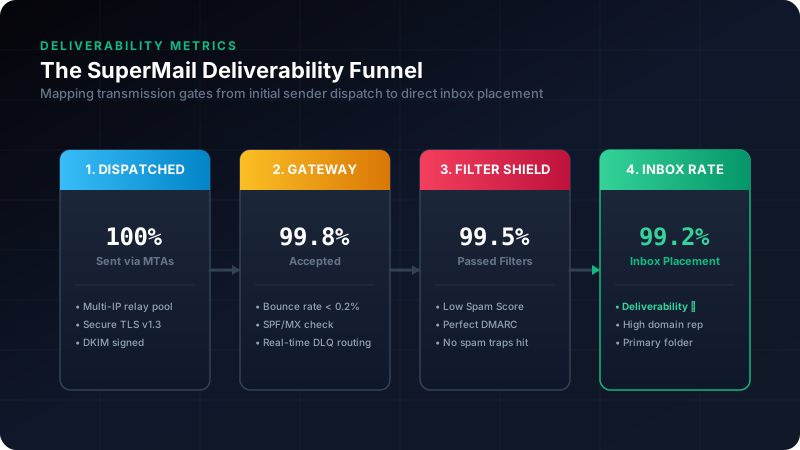
Building a great email campaign is useless if your messages never reach the recipient’s inbox. Modern email providers use highly sophisticated, machine-learning-driven spam filters to block suspicious emails before they are even seen.
The Three Pillars of Authentication
To ensure your emails are delivered, you must correctly configure three vital DNS records:
- SPF (Sender Policy Framework): Specifies which mail servers are authorized to send email on behalf of your domain.
- DKIM (DomainKeys Identified Mail): Adds a cryptographic signature to your emails, verifying that the email was not altered in transit.
- DMARC (Domain-based Message Authentication, Reporting, and Conformance): Uses SPF and DKIM to determine the authenticity of an email message and tells receiving servers how to handle failures (none, quarantine, or reject).
Sender Reputation and Warmup
Beyond authentication, your IP and Domain Reputation dictate deliverability. If you send 50,000 emails from a brand new domain, you will be instantly blacklisted. Always warm up your domain gradually to signal to ISPs that you are a legitimate sender.
Read more professional email & outreach guides on the SuperMail blog.
Related Posts
The Impact of Email Content Structure and HTML Complexity on Inbox Delivery
A quantitative study on how excessive nested HTML tables, hidden trackers, missing plaintext fallbacks, and keyword triggers degrade spam-filter scores.
Configuring SPF, DKIM, and DMARC for Cold Outreach Without Getting Flagged as Spam
A complete guide to the deep technical configuration of email authentication protocols. How to protect your domain's reputation and guarantee Inbox delivery in 2026.
Managing Domain Reputation and Avoiding Google Postmaster Drops
A guide to parsing feedback loops, analyzing user engagement impact, and tracking domain health matrices to guarantee consistent Inbox placement.
IP and Domain Warmup Strategies: How to Avoid Bans on New Inboxes
A step-by-step roadmap for warming up new domains and dedicated IP addresses. How to build your sender reputation from scratch to achieve consistent Inbox delivery within 4 weeks.
On this page
Category
email-guidesRelated Posts
The Impact of Email Content Structure and HTML Complexity on Inbox Delivery
A quantitative study on how excessive nested HTML tables, hidden trackers, missing plaintext fallbacks, and keyword triggers degrade spam-filter scores.
Configuring SPF, DKIM, and DMARC for Cold Outreach Without Getting Flagged as Spam
A complete guide to the deep technical configuration of email authentication protocols. How to protect your domain's reputation and guarantee Inbox delivery in 2026.
Managing Domain Reputation and Avoiding Google Postmaster Drops
A guide to parsing feedback loops, analyzing user engagement impact, and tracking domain health matrices to guarantee consistent Inbox placement.
IP and Domain Warmup Strategies: How to Avoid Bans on New Inboxes
A step-by-step roadmap for warming up new domains and dedicated IP addresses. How to build your sender reputation from scratch to achieve consistent Inbox delivery within 4 weeks.